


Beginn des Seitenbereichs:
Seitenbereiche:

  • Zum Inhalt (Zugriffstaste 1)
  • Zur Positionsanzeige (Zugriffstaste 2)
  • Zur Hauptnavigation (Zugriffstaste 3)
  • Zur Unternavigation (Zugriffstaste 4)
  • Zu den Zusatzinformationen (Zugriffstaste 5)
  • Zu den Seiteneinstellungen (Benutzer/Sprache) (Zugriffstaste 8)
  • Zur Suche (Zugriffstaste 9)

Ende dieses Seitenbereichs. Zur Übersicht der Seitenbereiche

Beginn des Seitenbereichs:
Seiteneinstellungen:

Deutsch de
English en
Suche
Anmelden

Ende dieses Seitenbereichs. Zur Übersicht der Seitenbereiche

Beginn des Seitenbereichs:
Suche:

Suche nach Details rund um die Uni Graz
Schließen

Ende dieses Seitenbereichs. Zur Übersicht der Seitenbereiche


Suchen

Beginn des Seitenbereichs:
Hauptnavigation:

Seitennavigation:

  • Universität

    Universität
    • Die Uni Graz im Portrait
    • Organisation
    • Strategie und Qualität
    • Fakultäten
    • Universitätsbibliothek
    • Jobs
    • Campus
    Lösungen für die Welt von morgen entwickeln – das ist unsere Mission. Unsere Studierenden und unsere Forscher:innen stellen sich den großen Herausforderungen der Gesellschaft und tragen das Wissen hinaus.
  • Forschungsprofil

    Forschungsprofil
    • Unsere Expertise
    • Forschungsfragen
    • Forschungsportal
    • Forschung fördern
    • Forschungstransfer
    • Ethik in der Forschung
    • Kommission für wissenschaftliche Integrität
    Wissenschaftliche Exzellenz und Mut, neue Wege zu gehen. Forschung an der Universität Graz schafft die Grundlagen dafür, die Zukunft lebenswert zu gestalten.
  • Studium

    Studium
    • Studieninteressierte
    • Infos für Studierende
    • Anmeldung zum Studium (Wintersemester 2026/27)
    • Welcome Weeks für Erstsemestrige
  • Community

    Community
    • International
    • Am Standort
    • Forschung und Wirtschaft
    • Absolvent:innen
    Die Universität Graz ist Drehscheibe für internationale Forschung, Vernetzung von Wissenschaft und Wirtschaft sowie für Austausch und Kooperation in den Bereichen Studium und Lehre.
Jetzt aktuell
  • Jetzt zum Studium anmelden
  • Jetzt die "Youni"-App holen
  • Klimaneutrale Uni Graz
  • Forscher:innen gefragt
  • Arbeitgeberin Uni Graz
Menüband schließen

Ende dieses Seitenbereichs. Zur Übersicht der Seitenbereiche

Beginn des Seitenbereichs:
Sie befinden sich hier:

Universität Graz Information und Service für PostDocs Neuigkeiten How to stimulate the creative part of your mind (Bojana Radovanović)
  • Blog
  • Tipps und Tricks
  • Förderungen
  • Angebote für PostDocs
  • Neuigkeiten
  • Veranstaltungen

Ende dieses Seitenbereichs. Zur Übersicht der Seitenbereiche

Mittwoch, 15.07.2026

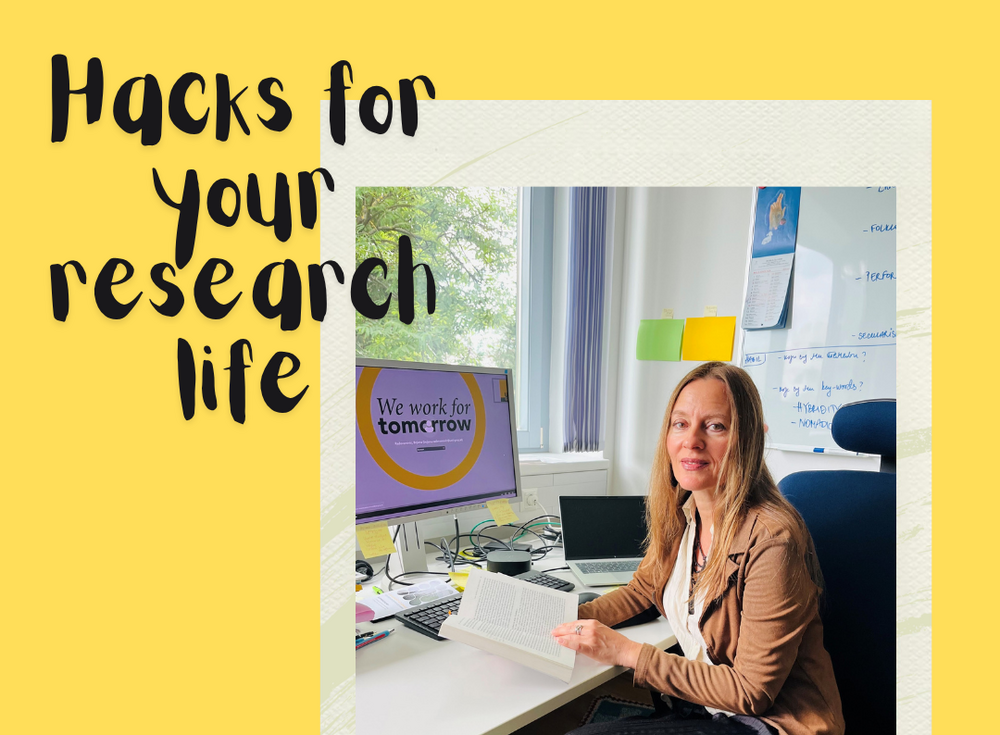
How to stimulate the creative part of your mind (Bojana Radovanović)

Portrait Bojana Radovanovic, (c) Stadlbauer

Read what works at work in our interview series with Uni Graz researchers

This summer, we're all about making space in your work life for those things YOU consider a priority. So we've asked our University of Graz researcher community about aspects of their daily work life that they have developed a useful routine for - and aspects that still need a “research life hack”.

Interview partner: 

  • Bojana Radovanović, Institut für Religionswissenschaft

Bojana Radovanović's daily work: 

  • She is an FWF Astra fellow, researching heterdoxy in religious expression in South-Eastern Europe from the Middle Ages to Modernity

The "happy hack" that makes Bojana more efficient/creative/motivated at work:

"The question of how to access the creative part of the mind has long been important to me, and also features in my mentoring with colleagues earlier in their career. For the work as a researcher, you don't need only the analytical part of your brain - you need another part as well. This part can be accessed through different practices, such as during the fluid and fragile state of waking up. This liminal state between dreaming and waking is often when the best ideas come to me, and I keep a notebook next to my bed, because you can forget the ideas very quickly. Similarly, you can enter this creative state when you focus on the nature passing by outside a train window, or when you practice mindful noticing of your environment during a walk. 

On a practical day-to-day level, what helps me is also to listen to myself and see which tasks fit my current situation: maybe I can postpone the writing for a day if I'm not creative enough right now, but I can do research admin more productively. 

And in terms of funding, I also have a great “hack” that served me well: reach out to Robert Fuchs of the FMS, he is a fantastic resource!"

And the challenge in her research life that she still needs a hack for:

“Being flooded with tasks that all seem urgent, and the feeling that time is escaping. I handle this by taking it step-by-step, and by making priorities among several tasks that I have to accomplish. It is important in research not to burn out!”

What is your own happy hack? Let us know!

Find the full series of interviews here: How to hack your research life - Research Careers Campus Graz

(Interview: Johanna Stadlbauer, 17.06.2026, picture credit: Stadlbauer)

Weitere Artikel

How can academia be enjoyable and kind? Dive into our content archive!

Browse all the interviews and think-pieces we produced since 2023!

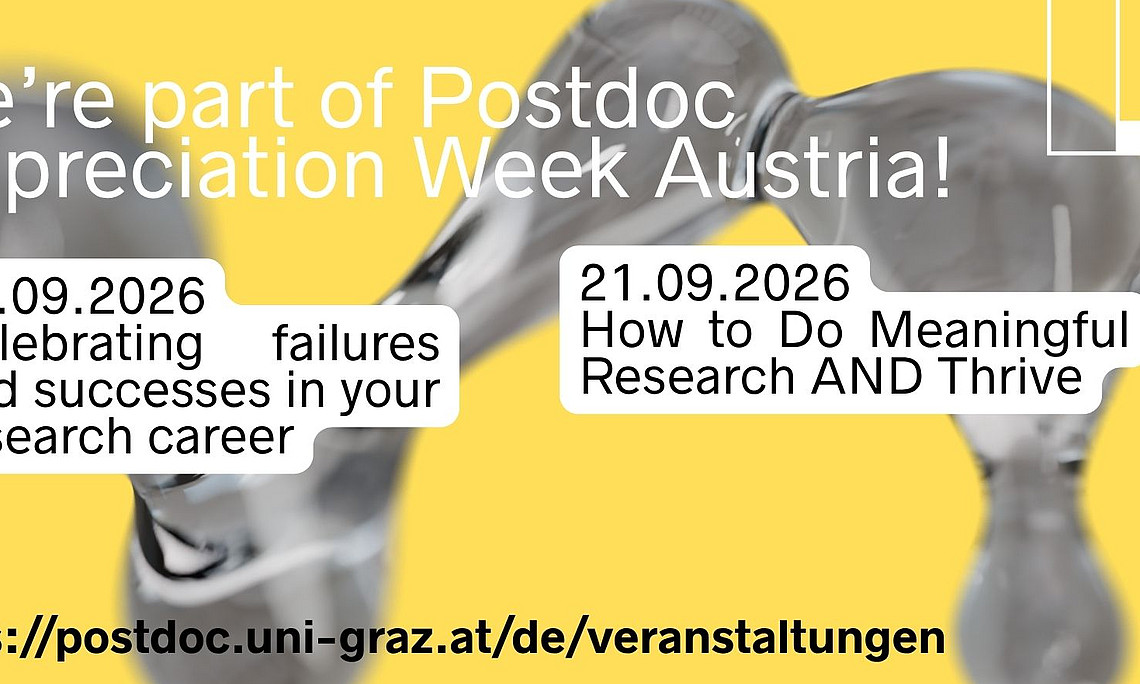
RCC celebrates Postdoc Appreciation Week with all of Austria

From Sept 21, research institutions across Austria offer a fantastic programme to celebrate postdocs

Ko-Stelle opens Call for Karriereprogramm for Female Researchers again!

apply by October 12

Where are you doing your job searching? Check out these boards and tips

Here are some platforms that list vacancies for people with a research background

Beginn des Seitenbereichs:
Zusatzinformationen:

Universität Graz
Universitätsplatz 3
8010 Graz
  • Anfahrt und Kontakt
  • Kommunikation und Öffentlichkeitsarbeit
  • Moodle
  • UNIGRAZonline
  • Impressum
  • Datenschutzerklärung
  • Cookie-Einstellungen
  • Barrierefreiheitserklärung
Wetterstation
Uni Graz

Ende dieses Seitenbereichs. Zur Übersicht der Seitenbereiche

Ende dieses Seitenbereichs. Zur Übersicht der Seitenbereiche

Beginn des Seitenbereichs:

Ende dieses Seitenbereichs. Zur Übersicht der Seitenbereiche